
Lapis Lazuli Blue Color Palette – HEX, RGB & Design Inspiration
Color Details
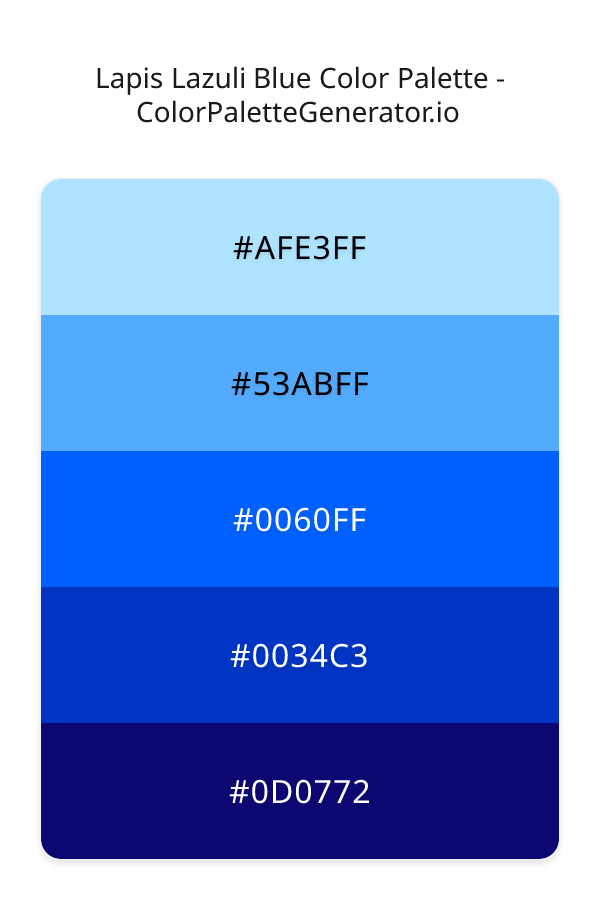
HEX: #AFE3FF
RGB: 175, 227, 255
HEX: #53ABFF
RGB: 83, 171, 255
HEX: #0060FF
RGB: 0, 96, 255
HEX: #0034C3
RGB: 0, 52, 195
HEX: #0D0772
RGB: 13, 7, 114
Text on White/Black Backgrounds
Color Pair Combinations (10 total)
WCAG Contrast Standards:
- AAA (7:1): Enhanced contrast for maximum readability
- AA (4.5:1): Minimum for normal text (under 18pt)
- AA Large (3:1): Acceptable for large text (18pt+ or 14pt+ bold)
- Fail: Below WCAG standards, not recommended for text
Recommended Text Colors
Horizontal (Left to Right)
background: linear-gradient(to right, #AFE3FF 0%, #53ABFF 25%, #0060FF 50%, #0034C3 75%, #0D0772 100%);Vertical (Top to Bottom)
background: linear-gradient(to bottom, #AFE3FF 0%, #53ABFF 25%, #0060FF 50%, #0034C3 75%, #0D0772 100%);Diagonal (Top Left to Bottom Right)
background: linear-gradient(to bottom right, #AFE3FF 0%, #53ABFF 25%, #0060FF 50%, #0034C3 75%, #0D0772 100%);Usage Tips:
- Copy the CSS code and paste directly into your stylesheets
- Linear gradients work great for backgrounds and hero sections
- Radial gradients are perfect for spotlights and focus effects
- Conic gradients create eye-catching loading spinners and progress indicators
- Smooth transitions ensure seamless color blending
Normal Vision
No color vision deficiency
Color Swatches
#AFE3FF
#53ABFF
#0060FF
#0034C3
#0D0772
Full Palette View
How people with Normal Vision see it:
Overall Mood & Feel
Calm, professional, and trustworthy
Emotional Impact
Calming and contemplative, promoting feelings of trust, stability, and peace. The balanced lightness creates versatility across different contexts
Psychological Effect
This 5-color palette creates a calm, professional, and trustworthy. The combination works together to create memorable visual experiences that influence consumer perception, decision-making, and brand recall. The rich variety provides versatility while maintaining cohesive emotional messaging across touchpoints.
Brand Personality Traits
Perfect For These Industries
Target Audience
Business professionals and decision-makers seeking reliability and competence
Individual Color Psychology
#AFE3FF
Peaceful and airy
Emotions Evoked
Personality Traits
Brand Traits
Ideal Industries
Marketing Use
Most popular color globally. Builds trust and reduces stress. Ideal for corporate brands, financial services, and healthcare. Can suppress appetite.
Cultural Meanings
Color Harmony Analysis
Palette Mood
Temperature
This palette combines light & airy and balanced and dark & bold moods with cool tones, making it versatile for various design applications.
Professional Implementation Guide
This analogous lapis lazuli blue palette features 5 carefully selected cool tones that create a balanced and versatile aesthetic. With high contrast levels and vibrant saturation, this palette is optimized for web interfaces and mobile apps.
Web Design & Development
For web development, implement this palette with CSS variables for easy theme switching. The high contrast makes it ideal for accessible interfaces meeting WCAG AA standards.
- Apply the 60-30-10 rule for visual hierarchy
- Use accent colors for CTAs and hover states
- Maintain consistent color usage across all pages
- Test responsive behavior on multiple devices
Mobile App Interfaces
In mobile applications, these cool tones provide excellent battery efficiency on OLED screens. Use the strong color contrast to define clear touch targets.
- Design both light and dark mode variants
- Consider thumb-reach zones for color placement
- Test under direct sunlight and low light
- Use color to indicate interactive elements
Brand Identity Systems
Build a cohesive brand identity by designating specific colors for specific purposes. Establish your primary brand color from the most distinctive shade and create comprehensive brand guidelines specifying exact usage scenarios.
- Define primary, secondary, and accent colors
- Create usage rules for marketing materials
- Specify minimum sizes and clear space
- Document do's and don'ts for consistency
Frontend Development
Developers can integrate this palette efficiently using modern CSS techniques. Export as CSS variables for maximum flexibility, allowing theme switching and dynamic color updates without rewriting stylesheets.
- Use CSS custom properties for theming
- Implement semantic color naming conventions
- Create utility classes for rapid prototyping
- Consider CSS-in-JS for component-scoped colors
Print Design
For print materials, convert to CMYK using #AFE3FF as the dominant color for headers and #0D0772 for accents. These vibrant colors may appear slightly muted in print; request color proofs.
- Add to your design software color library
- Create swatches for quick color access
- Use CMYK values for print production
- Request color proofs before final print
Marketing Campaigns
Marketing materials benefit from consistent color usage that reinforces brand recognition. Apply this palette across email campaigns, landing pages, advertisements, and social media for maximum impact and memorability.
- Maintain color consistency across channels
- A/B test color variations for conversion
- Consider cultural color associations
- Align colors with campaign messaging
Strategic Color Distribution
Professional designers follow the 60-30-10 rule for balanced color distribution. Here's how to apply this principle with the Lapis Lazuli Blue:
Dominant Color
#AFE3FFUse #AFE3FF as your primary color for backgrounds, main content areas. This blue tone should occupy about 60% of your design space.
Secondary Color
#0060FFApply #0060FF as your secondary color for supporting elements and section dividers. Allocate approximately 30% of your layout to this color.
Accent Color
#0D0772Reserve #0D0772 for accent elements like buttons, links, and important highlights. This blue accent should be used sparingly (10% of design) to draw attention to key actions.
Professional Best Practices
✓ Smart Usage Tips
- •Use desaturated versions (reduce saturation by 20-30%) for large background areas to prevent visual fatigue
- •Add warm accent colors to create focal points and prevent designs from feeling too cold
- •Test your palette across different devices and lighting conditions before finalizing
✗ Common Mistakes to Avoid
- •Don't use all colors equally—establish clear visual hierarchy through color weight
- •Avoid low-contrast text combinations that strain readability
- •Don't rely solely on color to convey meaning (use icons, text, and patterns too)
- •Avoid inconsistent color usage across different pages or screens
- •Don't assume screen colors match print output—always request physical proofs
Palette Overview & Statistics
5
Total Colors
2
Associated Tags
6
Categories
827
Community Likes
Color Analysis & Technical Guide
Detailed breakdown of each color's role, characteristics, and optimal applications. This analogous palette creates a balanced and versatile aesthetic perfect for web interfaces and mobile apps.
Individual Color Breakdown
Each color in this cool palette has been analyzed for its properties and ideal usage scenarios. The high contrast and vibrant saturation ensure excellent readability and accessibility.
#AFE3FF
BLUE
#AFE3FF serves as the primary/dominant color in this palette. This light blue (highly saturated) brings trust and tranquility Use it for backgrounds, containers, and large surface areas.
Light toneH: 201°S: 100%L: 84%#53ABFF
BLUE
#53ABFF serves as the secondary/supporting color in this palette. This medium blue (highly saturated) brings trust and tranquility Use it for cards, borders, section dividers, and supporting UI components.
Light toneH: 209°S: 100%L: 66%#0060FF
BLUE
#0060FF serves as the secondary/supporting color in this palette. This medium blue (highly saturated) brings professionalism and depth Use it for cards, borders, section dividers, and supporting UI components.
Dark toneH: 217°S: 100%L: 50%#0034C3
BLUE
#0034C3 serves as the secondary/supporting color in this palette. This medium blue (highly saturated) brings professionalism and depth Use it for cards, borders, section dividers, and supporting UI components.
Dark toneH: 224°S: 100%L: 38%#0D0772
BLUE
#0D0772 serves as the accent/highlight color in this palette. This dark blue (highly saturated) brings professionalism and depth Use it for call-to-action buttons, links, important notifications, and interactive elements.
Dark toneH: 243°S: 88%L: 24%
Palette Characteristics
This palette exhibits distinct characteristics that make it particularly suitable for specific design applications and industries.
Cool tones convey professionalism, trust, and calmness. Ideal for corporate and tech applications.
High contrast ensures excellent readability and meets WCAG accessibility standards for most text combinations.
Vibrant saturation creates bold, attention-grabbing designs perfect for youth brands and creative projects.
Balanced brightness provides flexibility for both light and dark design elements.
💡 Pro Tips for This Palette
- Perfect for: web interfaces, mobile apps. The analogous color relationship creates natural visual flow.
- Mood & Psychology: This palette evokes a balanced and versatile feeling, making it ideal for brands seeking to convey those qualities.
- Accessibility: Excellent contrast makes this palette naturally accessible. Most color combinations will meet WCAG AA standards.
- Extensions: Create tints (add white) and shades (add black) to expand this 5-color palette into a comprehensive design system.
- Cultural Context: Cool tones are generally perceived as professional worldwide but always research cultural color meanings.
Export Formats
Explore Lapis Lazuli Blue Palette
The Lapis Lazuli Blue color palette is a captivating and invigorating collection of hues that evoke the sensation of a clear summer sky and the depths of a still ocean. This monochromatic palette is characterized by its cool, vibrant, and bold tones that exude an energetic and lively atmosphere, making it perfect for designs that require a sense of dynamism and freshness. The palette's style categories, which include monochromatic, cool, vibrant, bold, energetic, and sky, make it an ideal choice for designs that aim to convey a sense of freedom and limitless possibilities.
At the heart of the Lapis Lazuli Blue palette is a range of blue shades that graduate from light to dark, each with its unique character and role in the palette. The lightest shade, AFE3FF, is a soft and serene hue that sets the tone for the palette, providing a sense of calmness and tranquility. As we move to the next shade, 53ABFF, the tone becomes more saturated and vibrant, injecting a sense of energy and playfulness into the design. The mid-tone, 0060FF, is a deep and rich blue that adds depth and complexity to the palette, while the darker shades, 0034C3 and 0D0772, provide a sense of luxury and sophistication. Each of these shades works in harmony to create a cohesive and balanced visual experience that draws the viewer in and refuses to let go.
The Lapis Lazuli Blue palette is incredibly versatile and can be applied to a wide range of design contexts, from websites and apps to branding and marketing materials. Its cool and calming tones make it an excellent choice for designs that require a sense of trust and reliability, such as financial or healthcare websites. At the same time, its bold and vibrant shades make it perfect for designs that aim to grab attention and stand out from the crowd, such as entertainment or lifestyle apps. Whether you're designing a website, creating a brand identity, or developing a marketing campaign, the Lapis Lazuli Blue palette is sure to add a touch of elegance and sophistication to your design.
The colors in the Lapis Lazuli Blue palette have a profound impact on viewer perception and behavior, influencing the way we feel and interact with a design. Blue is often associated with feelings of trust, loyalty, and wisdom, making it an excellent choice for designs that require a sense of credibility and authority. The darker shades in the palette, such as 0034C3 and 0D0772, can create a sense of luxury and exclusivity, while the lighter shades, such as AFE3FF and 53ABFF, can evoke feelings of happiness and joy. By leveraging the psychological effects of these colors, designers can create designs that resonate with their audience and leave a lasting impression.
When working with the Lapis Lazuli Blue palette, it's essential to consider complementary colors and pairing suggestions to create a harmonious and balanced visual experience. Neutral colors such as white, gray, and beige can provide a clean and simple backdrop for the blue shades to shine, while earthy tones such as green and brown can add warmth and depth to the design. To get the most out of this palette, designers should also consider the 60-30-10 rule, where the dominant color, in this case, 0060FF, occupies 60 percent of the design, the secondary color, 53ABFF, occupies 30 percent, and the accent color, 0D0772, occupies 10 percent. By following these design best practices and leveraging the unique characteristics of the Lapis Lazuli Blue palette, designers can create stunning and effective designs that captivate and inspire their audience.
Palette Image
Below is the generated palette image showing all colors in a vertical layout. Perfect for sharing on social media or using as a reference.
Frequently Asked Questions
Everything you need to know about using and implementing the lapis lazuli blue palette effectively in your projects.